
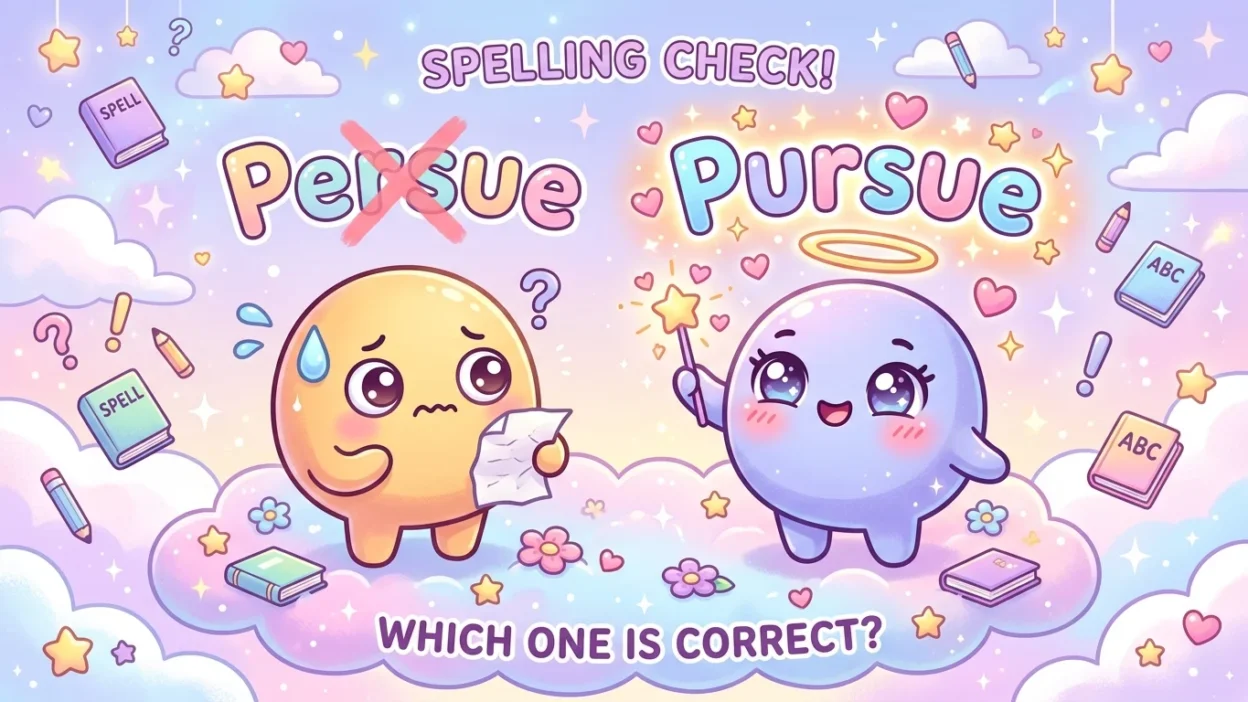
The debate around persue vs pursue often confuses writers, but the truth is simple: persue is a common mistake, while pursue is the correct spelling in English.
I have seen this error in tweets, emails, essays, and job applications. If you have ever hesitated while typing this word, you are not alone. Many words in the language can look right at first, but a quick check in the dictionary will show the difference between the two forms.
This guide clears confusion and explores the meaning and usage of the word. One of the most tricky spelling mix-ups happens because some people think persue looks natural. However, here is the rule to remember forever: never use persue. The correct form is always pursue. In grammar and writing, accuracy matters, especially in professional communication.
Before sending emails, posting tweets, or submitting essays and job applications, find time to review your work. This habit gives clever tricks for avoiding mistakes. If you can slow down and check the spelling in the dictionary, it will help all your writing. Keep one thing in mind: for clear English, the choice is pursue, not persue, until it becomes second nature in every piece of writing.
Quick Answer
Pursue is the correct spelling.
Persue is a misspelling and is not recognized as a standard English word.
Correct: I want to pursue a career in medicine.
Incorrect: I want to persue a career in medicine.
What Does Pursue Mean?
The word pursue is a verb that means to follow, continue, seek, or work toward something. It is commonly used when talking about goals, dreams, opportunities, education, careers, or interests.
For example:
- She decided to pursue higher education.
- They will pursue legal action.
- He wants to pursue his passion for music.
- We should pursue every opportunity to learn.
In each example, the word suggests actively moving toward a goal or objective.
Is Persue a Real Word?
No. Persue is not considered a correct English word.
It is simply a spelling mistake that occurs when people confuse the placement of the letters. Since English spelling rules can sometimes be unpredictable, many writers assume persue looks right. However, dictionaries, grammar guides, and style manuals all recognize only pursue as correct.
If you see persue in writing, it should be corrected to pursue.
Persue vs Pursue Comparison Table
| Feature | Persue | Pursue |
|---|---|---|
| Correct English Word | No | Yes |
| Dictionary Recognition | No | Yes |
| Accepted in Formal Writing | No | Yes |
| Used in Academic Writing | No | Yes |
| Used in Professional Communication | No | Yes |
| Meaning | None | To follow, seek, or continue |
Why Do People Misspell Pursue?
Several factors contribute to this common spelling error.
Similar Letter Patterns
Many English words contain combinations such as er, ir, or ur. Because of this, some writers mistakenly replace the u with an e.
Fast Typing
When people type quickly, especially on phones or laptops, spelling mistakes become more common.
Lack of Familiarity
Writers who do not frequently use the word may rely on memory rather than checking a dictionary.
Visual Confusion
The incorrect form persue can appear believable at first glance, making it easy to overlook.
Examples of Pursue in Sentences
Seeing a word in context often makes it easier to remember.
- I plan to pursue a degree in engineering.
- She chose to pursue her lifelong dream.
- The company will pursue new business opportunities.
- They continue to pursue excellence in customer service.
- We should pursue solutions instead of focusing on problems.
- He wants to pursue a career in technology.
- The detective pursued every lead in the investigation.
These examples demonstrate the versatility of the word in everyday and professional communication.
Common Mistakes Related to Pursue
Many people make similar mistakes when writing this word.
Mistake 1: Using Persue Instead of Pursue
Incorrect:
- I want to persue my goals.
Correct:
- I want to pursue my goals.
Mistake 2: Assuming Spell Check Will Catch Everything
Although modern tools often identify errors, relying entirely on spell-check software can lead to missed mistakes.
Mistake 3: Forgetting the Correct Letter Order
Remember that pursue contains ur, not er, at the beginning.
Easy Ways to Remember the Correct Spelling
Memory tricks can help prevent future mistakes.
Think of “Pure”
The word pursue contains the letters u-r-s-u. Many learners connect it with the sound pattern found in pure.
Remember the Goal Connection
When you pursue a goal, you move upward toward success. The letter u appears twice in the correct spelling.
Practice Writing It
Repeated exposure helps build long-term memory. Write the word correctly several times in sentences.
Pursue in Professional Writing
Accurate spelling matters in business communication. A small spelling error can affect credibility, especially in:
- Job applications
- Cover letters
- Business emails
- Academic essays
- Reports
- Presentations
When employers, teachers, or clients review your work, correct spelling demonstrates attention to detail and professionalism.
Pursue in Everyday Language
The word appears frequently in daily conversations and writing.
You might pursue:
- A new hobby
- Better health
- Career advancement
- Educational opportunities
- Personal growth
- Financial goals
- Creative interests
Because the word is so common, learning its correct spelling provides lasting benefits.
American vs British English
There is no difference between American and British English for this word.
Both varieties use pursue as the correct spelling.
Examples:
- American English: She wants to pursue a law degree.
- British English: She wants to pursue a law degree.
The spelling remains identical across both forms of English.
Related Words and Synonyms
Depending on the context, these words may have similar meanings:
- Follow
- Seek
- Chase
- Continue
- Aim for
- Strive for
- Work toward
- Go after
- Advance
- Target
While these words share similarities, pursue often emphasizes consistent effort toward a goal.
Which spelling is correct: persue or pursue?
Pursue is the correct spelling. Persue is a misspelling and should be avoided.
Is pursue a real English word?
Yes. Pursue is a standard English verb used in both formal and informal writing.
Why do people write persue?
People often write persue because the incorrect spelling looks similar to the correct word and can be easy to mistype.
Is pursue used in professional writing?
Yes. The word frequently appears in resumes, business emails, reports, and academic papers.
Is there a British spelling of pursue?
No. American and British English both use pursue.
What does pursue mean?
Pursue means to follow, continue, seek, or work toward something.
How can I remember the correct spelling?
Remember that the correct word starts with “pur” and practice using it in sentences.
Should I correct persue when proofreading?
Absolutely. Replacing persue with pursue improves accuracy and professionalism.
Summary
The comparison between persue vs pursue is straightforward. Pursue is the only correct spelling recognized in English, while persue is simply a common misspelling.
Whether you are writing an email, essay, report, or social media post, using the correct spelling strengthens your communication and helps you appear more professional.
If you ever hesitate, remember this simple rule: always choose pursue. Taking a few seconds to proofread and verify spelling can prevent mistakes and improve the quality of your writing over time.

Leo Meteo is a versatile blogger who writes about lifestyle, trends, and wellness topics. He enjoys creating content that is informative, relatable, and engaging for readers. Leo actively contributes articles to NickHubs.com, helping grow its content library.