Many English learners wonder whether unalienable or inalienable is the correct word.
Since both terms appear in legal documents, historical texts, and modern writing, the choice can feel confusing.
Quick Answer
✨ Here’s the simple rule:
✅ Unalienable = cannot be taken away or transferred
✅ Inalienable = cannot be taken away or transferred
🌟 The main difference:
- Inalienable is more common in modern English.
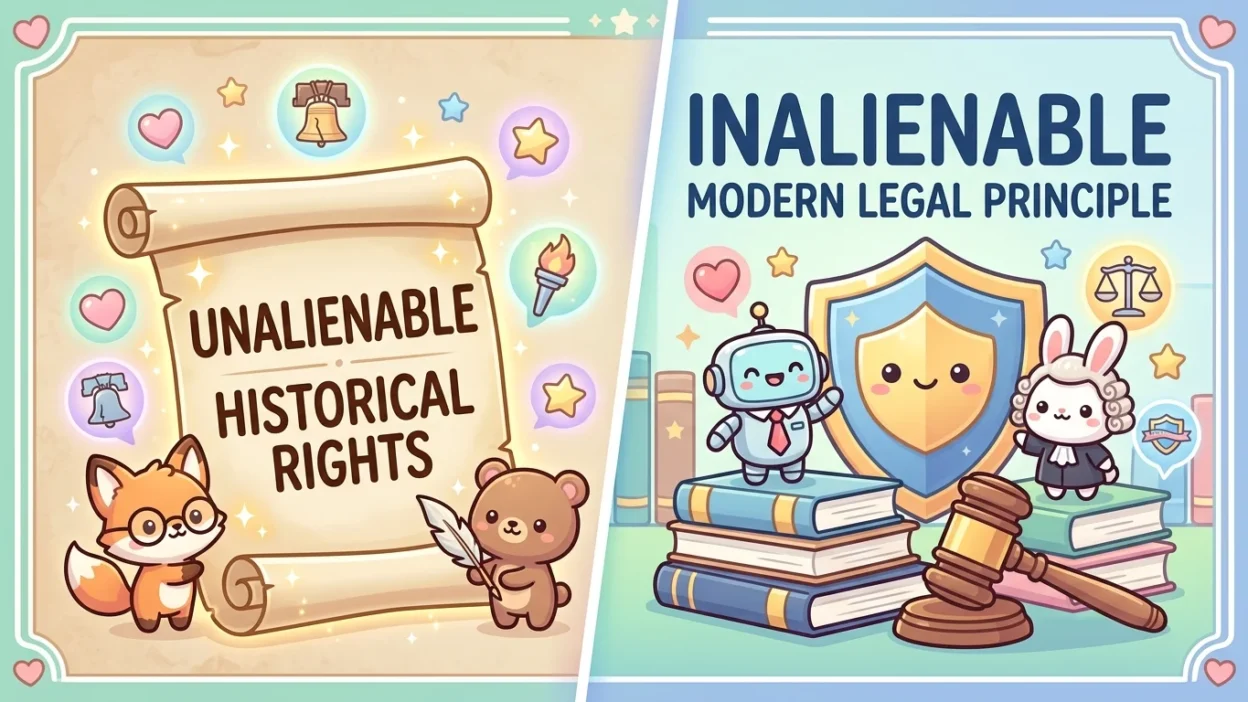
- Unalienable is more famous in historical and political documents.
Examples:
- People have inalienable rights. ✔
- People have unalienable rights. ✔
What Does Inalienable Mean?
First of all, inalienable means something cannot be surrendered, transferred, sold, or taken away. Therefore, people often use it when discussing rights, freedoms, and human dignity.
Common Uses
- Human rights
- Legal rights
- Fundamental freedoms
- Political discussions
Examples
- Every person has inalienable rights.
- Freedom of conscience is considered inalienable.
- Some philosophers argue that liberty is an inalienable right.
👉 As a result, inalienable is the preferred term in most modern legal and academic writing.
What Does Unalienable Mean?
On the other hand, unalienable carries essentially the same meaning. However, it appears less frequently in contemporary English.
Most notably, the word became famous through the United States Declaration of Independence, which refers to “unalienable Rights.”
Examples
- The declaration speaks of unalienable rights.
- Many people view freedom as an unalienable principle.
- The concept of unalienable rights influenced political thought worldwide.
👉 Therefore, unalienable often sounds more historical or traditional.
Unalienable vs Inalienable: Key Differences
| Feature | Unalienable | Inalienable |
|---|---|---|
| Meaning | Cannot be taken away | Cannot be taken away |
| Modern Usage | Less common | More common |
| Historical Usage | Very common | Common |
| Legal Writing Today | Less frequent | More frequent |
Which One Is More Common?
Today, most writers prefer inalienable.
For example:
✅ Inalienable rights
✅ Inalienable freedoms
✅ Inalienable dignity
Meanwhile, unalienable remains popular when discussing historical documents, political philosophy, or the language of the Declaration of Independence.
👉 Consequently, inalienable usually sounds more natural to modern readers.
Common Mistakes to Avoid
Although the meanings are almost identical, some people mistakenly think one word is wrong.
❌ Incorrect Assumption
- Unalienable is outdated and incorrect.
✅ Correct Understanding
- Unalienable is correct but less common.
❌ Incorrect Assumption
- Inalienable and unalienable have different meanings.
✅ Correct Understanding
- Both words essentially mean the same thing.
👉 Therefore, your choice mainly depends on style and context.
Easy Trick to Remember
Whenever you feel unsure, remember:
🔹 Inalienable = modern favorite
🔹 Unalienable = historical favorite
Think:
- Modern legal article → inalienable
- Historical quotation → unalienable
Because of this simple trick, choosing the right word becomes much easier.
American vs British English
Interestingly, both American and British English recognize both words.
However, modern publications in both countries generally prefer inalienable. Meanwhile, unalienable continues to appear in historical, constitutional, and philosophical discussions.
Real-Life Examples
Using Inalienable
- Human beings possess inalienable rights.
- Many constitutions protect inalienable freedoms.
- Dignity is often considered inalienable.
Using Unalienable
- The Declaration refers to unalienable rights.
- Scholars still discuss unalienable liberties.
- The phrase remains important in political history.
Why This Difference Matters
Although the difference seems small, word choice can affect tone and style.
When you choose the right term:
- Your writing sounds more natural.
- Your historical references feel accurate.
- Your legal discussions become clearer.
- Your vocabulary becomes more precise.
Therefore, understanding the distinction helps you communicate more effectively.
FAQs
Which is correct, unalienable or inalienable?
Both are correct and carry nearly identical meanings.
Do unalienable and inalienable mean the same thing?
Yes. Both describe rights or qualities that cannot be taken away or transferred.
Which word is more common today?
Inalienable is more common in modern English.
Why does the Declaration of Independence use unalienable?
That spelling reflected the language preferences of the period and became historically famous.
Which word should I use in modern writing?
In most cases, inalienable will sound more natural to modern readers.
Final Thoughts
Now you know that both unalienable and inalienable are correct. While they share essentially the same meaning, inalienable dominates modern English, whereas unalienable remains closely associated with historical and political texts.

Leo Meteo is a versatile blogger who writes about lifestyle, trends, and wellness topics. He enjoys creating content that is informative, relatable, and engaging for readers. Leo actively contributes articles to NickHubs.com, helping grow its content library.