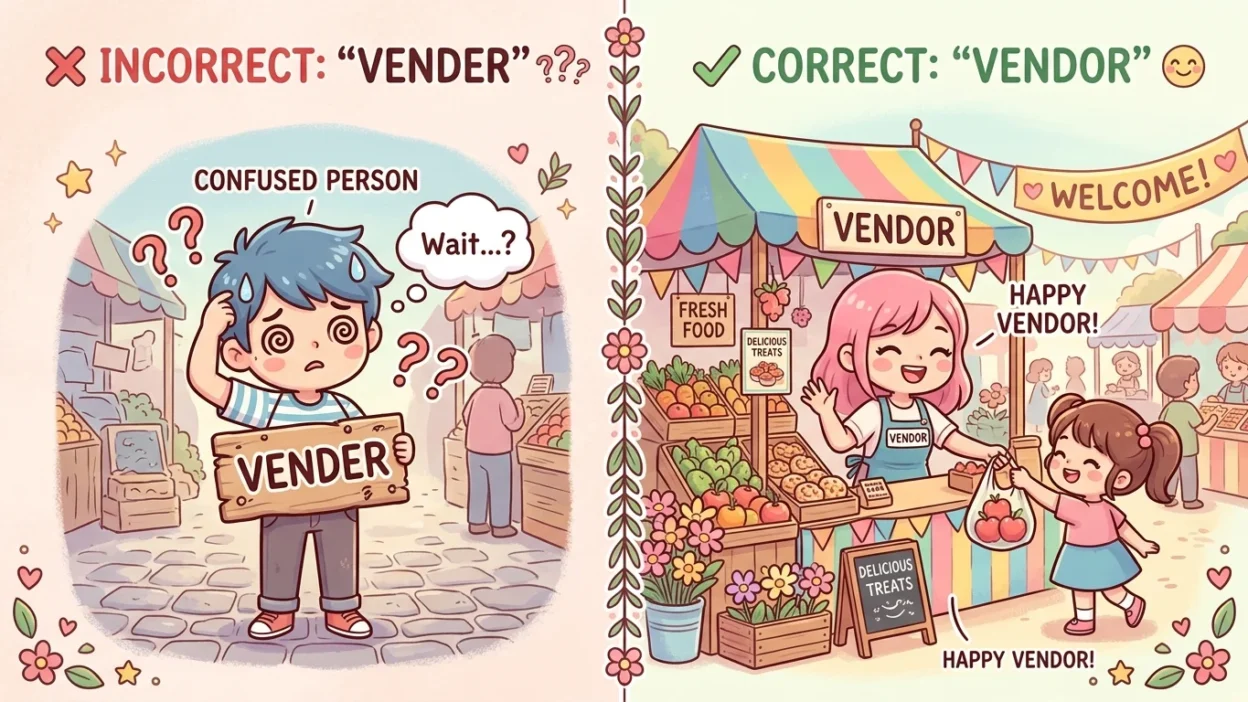
If you’ve ever typed vender and paused, wondering if it should actually be vendor, you’re not alone.
These two words look almost identical, but one is widely accepted in modern English while the other is rarely used—and often considered incorrect in everyday writing.
Let’s clear it up in a simple, practical way so you always choose the right word without second-guessing.
Quick Answer
- Vendor is the correct and commonly used word.
- Vender is an outdated or rare alternative spelling that is almost never used today.
Simple rule: Always use vendor in modern writing.
What Does Vendor Mean?
Vendor refers to a person or business that sells goods or services. It’s used across everyday language, business, technology, and legal contexts.
Common Uses of Vendor
- Business: “We need a reliable vendor for supplies.”
- Events: “Food vendors lined the street.”
- Tech: “Software vendors provide updates regularly.”
Examples
- The company chose a new vendor for office equipment.
- Local vendors sold handmade crafts at the market.
- We contacted the vendor for support.
In short, vendor is the standard, correct spelling everywhere.
What Does Vender Mean?
Vender is a less common variant of vendor. While technically recognized in some dictionaries, it’s considered outdated or nonstandard in modern English.
When You Might See Vender
- Older texts or documents
- Rare regional or historical usage
Examples
- The vender sold fruits in the old market. (rare usage)
In most cases, using vender today may look like a spelling mistake.
Vender vs Vendor: Key Differences
Here’s a clear comparison:
| Feature | Vendor | Vender |
|---|---|---|
| Status | Standard, correct | Rare, outdated |
| Usage | Very common | Almost never used |
| Context | Business, daily language | Historical or uncommon |
| Recommendation | Always use | Avoid using |
Common Mistakes to Avoid
1. Using “Vender” in Professional Writing
❌ Please contact the vender
✔️ Please contact the vendor
Using vender can make your writing look less polished.
2. Assuming Both Are Equal
They are not equally accepted. Vendor is the preferred form in modern English.
3. Mixing Spellings
Stay consistent. Switching between vendor and vender can confuse readers.
Real-Life Examples
- A street food vendor selling snacks
- An online vendor providing services
- A software vendor offering tools
You’ll notice vendor fits naturally in every modern context.
American vs British English
There’s no difference here—both American and British English use vendor as the standard spelling.
- Vendor → correct in both regions
- Vender → rarely used in either
Related Words and Synonyms
To expand your vocabulary, here are similar terms:
- Seller
- Supplier
- Merchant
- Provider
- Trader
These can sometimes replace vendor depending on context.
When Should You Use Vendor?
Use vendor when referring to:
- Businesses selling products
- Service providers
- Market sellers
- Technology or software providers
It’s safe, correct, and widely understood in all situations.
FAQs
1. Is vender a real word?
Yes, but it’s outdated and rarely used in modern English.
2. Which spelling is correct?
Vendor is the correct and preferred spelling.
3. Why do people write vender?
Usually due to confusion or spelling habits, but it’s not recommended.
4. Can I use vender in formal writing?
No, it’s best to avoid it and use vendor instead.
5. Is vendor used globally?
Yes, it’s standard in both American and British English.
6. Does vendor only mean a seller?
Mostly yes, but it can also refer to service providers.
7. Is vendor used in technology?
Yes, it’s very common in software and IT industries.
Final Thoughts
The correct difference between vender vs vendor is simple but important. Vendor is the modern, widely accepted spelling used in everyday language, business, and professional writing. On the other hand, vender is outdated and rarely used today.
Once you understand this clear distinction, choosing the correct word becomes effortless. Stick with vendor in all situations to keep your writing accurate, professional, and easy to understand.

Lucas Liam is a skilled writer with a passion for research based and reader friendly content. His work covers multiple topics, including technology and self improvement. Lucas is a valued author at NickHubs.com, delivering clear and helpful articles.